The Crowd Is a Number: What Sportsbook Lounges Know About the Herd That Your Spreadsheet Doesn't
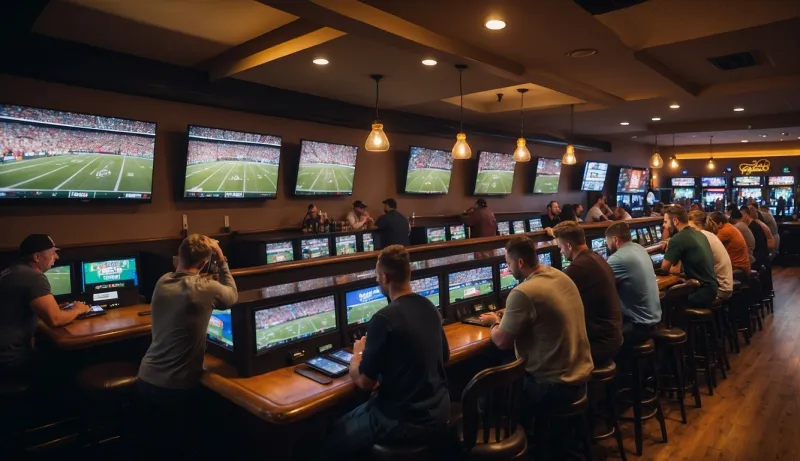
Photo: crowded sportsbook lounge people watching sports betting screens, via koala.sh
Walk into a big retail sportsbook on a Sunday afternoon — say, the ones dotting the Las Vegas Strip or the lounges attached to Atlantic City casinos — and you'll notice something odd. Nobody's quietly checking a spreadsheet. They're yelling. They're groaning. They're ordering another round and slamming the bar when the kicker shanks it.
That noise isn't just atmosphere. It's market data.
The Room Is a Market
Most bettors think of line movement as a chess match between sharp syndicates and oddsmakers. And sure, a steam move at 2 PM on a Tuesday usually means professional money just landed. But a huge chunk of real-world line movement happens somewhere else entirely: in the room.
Retail sportsbooks are, functionally, giant sentiment sensors. When three hundred people in a Nevada racebook are all leaning the same way on a divisional rivalry, that's not abstract — it's a flood of tickets, many of them impulsive, many of them placed within arm's reach of the bar. Books don't need a model to know the public loves the popular side this week. They can just look up.
Industry folks have a name for this: the square herd. And pricing the herd is a genuine discipline, not an afterthought.
How Books Actually Price the Herd
Here's the part most casual bettors never think about. Sportsbooks don't just set a line to reflect the true probability of an outcome. They set a line to balance their book — or, when they're confident, to deliberately load up on the side they think the crowd will overbet.
A few things insiders watch:
- Ticket count vs. money percentage. If 75% of tickets are on one side but only 55% of the dollars, the herd is betting small and the sharps are betting big. That's a tell.
- Time of day. Herd money piles in late — Friday nights, Saturday mornings, right before kickoff. A line move at 9 AM Wednesday means something very different than the same move at 12:55 Sunday.
- Location, location, location. A bet placed at a casino lounge in New Jersey after three drinks is not the same as a bet placed by a professional in a dim office with six monitors. Books track the channel.
The result? Sometimes the posted line isn't a prediction at all. It's a trapdoor built specifically for the room.
Why Your Model Can't Hear the Crowd
If you bet off a spreadsheet — and honestly, you should have one — here's the blind spot. Your model prices teams. It doesn't price people.
But people are the market. A hometown crowd in Philadelphia bets differently than a crowd in Phoenix. Prime-time national games attract casual money in volumes that distort lines for hours. Rivalry weeks, storylines, a viral highlight — none of that shows up in an expected-goals model, and all of it shows up in the number.
The sharpest bettors treat crowd sentiment as a second dataset. Not a replacement for the math — a layer on top of it. When the room is screaming one direction and the line barely budges, that's information. When the line moves against overwhelming public tickets, that's louder information.
The Lounge Comeback
There's a reason sportsbooks keep building bigger, nicer retail lounges even as mobile betting dominates handle. A room full of bettors generates energy, and energy generates bets — including bets people wouldn't have made alone on their couch.
States like Nevada never really gave up the lounge model, and post-legalization, New Jersey and others have followed with hotel-lobby sportsbooks that feel more like upscale sports bars than betting windows. Big screens, food menus, communal groaning. It's theater, and it's also very, very good for the house's bottom line.
Which cuts both ways. If you're betting from the bar, understand you're in the most expensive seat in the building. The drinks are flowing, the crowd is loud, and every instinct you have is being nudged toward the popular side at a number that's already baked the herd in.
Reading the Room Without Getting Read
You don't have to swear off sportsbooks or watch parties. Just bet like someone who knows what the room is doing to you:
- Decide your play before you arrive. If the environment can change your mind, the environment is handicapping you.
- Fade your own enthusiasm at peak hours. If a number looks great at 11 PM in a crowded book on game day, double-check it sober tomorrow.
- Track line movement against public percentages on the games you care about. When the crowd piles in and the number doesn't move — or moves the other way — someone with real money is on the other side.
- Enjoy the noise, don't bet the noise. The guy yelling at the TV knows something your model doesn't: what everyone else is feeling. That's valuable context — as long as you're the one using it, not the other way around.
The market has always been part math, part mob. The books know it. The sharps know it. Now you do too — and unlike the guy at the end of the bar, you can put that knowledge to work before the second round of drinks does its damage.