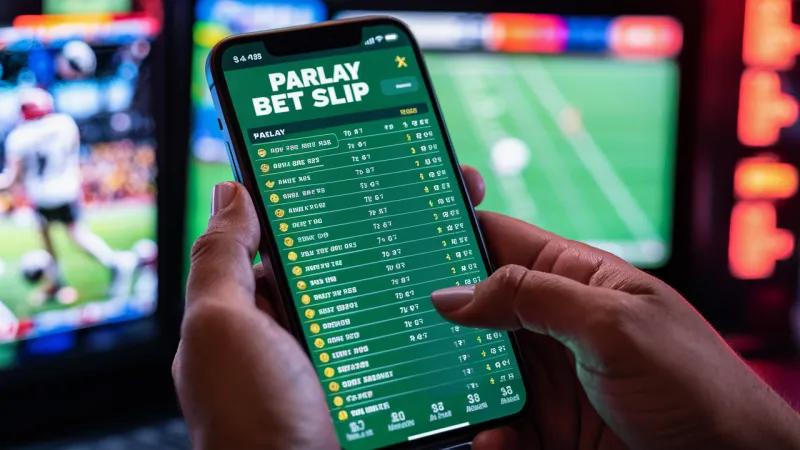
Who's Really Moving That Line? A Bettor's Field Guide to Reading the Story Behind the Number

Photo: P1898, CC BY 4.0, via Wikimedia Commons
The board opens on a Tuesday morning. The Chiefs are -3 against the Raiders, a number that feels about right. By Thursday night, that same line reads -4.5. Nobody held a press conference. No star receiver popped up on the injury report. So what happened between Tuesday and Thursday — and more importantly, what does it mean for your money?
That's the question most casual bettors never ask. They see a moved line and assume one of two things: either the books know something and they should follow, or it's all random noise and they should ignore it. The truth lives somewhere more interesting in between, and learning to read it is one of the biggest skill jumps you can make as a bettor.
Every Line Move Has an Author
Think of a point spread like a stock price. It only moves when money forces it to move, and the identity of that money changes everything about how you should react.
There are basically three authors of any line movement:
The sharps. Professional bettors and syndicates who bet serious volume and are respected by the books. When they hammer a number, sportsbooks adjust quickly because these are the accounts that actually win long-term. Sharp moves tend to happen early in the week, often against the direction the public is leaning, and they frequently cross key numbers (more on those in a minute).
The public. Recreational money that tends to show up in waves, usually toward favorites, overs, and popular teams. Public money is heavy on weekends and peaks right before kickoff. The books don't fear it — they'll often let a line drift slightly because it traps more casual dollars on the wrong side.
The news. Injuries, rest decisions, weather, late scratches. This is the easiest type of move to understand because it comes with a reason attached. When a starting quarterback is ruled out on Friday, the line doesn't move mysteriously. It moves because the underlying reality changed.
The hard part, of course, is that all three can produce the same visible result — a number that ticks up or down. Your job is to figure out which author you're dealing with before you decide whether to follow.
The Chiefs-Raiders Thought Experiment
Let's go back to that -3 moving to -4.5. Three different scenarios, three very different reads:
Scenario one: sharp money came in on Kansas City early in the week. Books moved to -4, then -4.5 as the sharps kept betting through the resistance. If that's the story, the market is telling you the true power rating gap between these teams is bigger than three points. The original line was soft, and professionals found it. Following the move here is usually fine — you're just paying a tax for arriving late.
Scenario two: the public showed up. Chiefs are America's team, casual bettors see -3 against a bad Raiders squad, and the tickets pile up. If the books moved the line despite balanced liability — or worse, to attract Raiders money — that -4.5 isn't a signal. It's a toll booth. Laying an extra point and a half on a number the crowd inflated is exactly how sportsbooks win the season.
Scenario three: nothing happened at all. Sometimes a half-point drift is just the market slowly settling, or one book testing a number and others following. Not every move is a telegram.
Same visible movement. Completely different meanings. The spread isn't just a number — it's a story, and you have to identify the narrator.
Signal Versus Steam: A Simple Framework
Here's a practical checklist to run through whenever you spot a move:
1. When did it move? Early-week moves are more likely sharp-driven, because professionals bet before the public floods in. Late Saturday night and Sunday morning moves skew heavily toward public money. A move that happens at 9 a.m. Wednesday carries more weight than the same move at 11:55 a.m. Sunday.
2. Did it cross a key number? In the NFL, 3 and 7 are the most common margins of victory, which is why lines get sticky around them. A move from -2.5 to -3.5 crosses two of the most meaningful numbers on the board — that's a significant jump in information. A move from -6 to -6.5 is comparatively quiet. In the NBA, key numbers cluster around 2 and 3 due to late fouling and three-point math, so treat those crossings with the same respect.
3. Does the move match the betting volume? If 85% of tickets are on the favorite but the line moves toward the underdog, that's a classic reverse-line movement — the small percentage of money on the other side is heavy and respected. That's often the sharpest signal available to a recreational bettor, and it's the closest thing to free information on the board.
4. Is there a reason you can name? If you can't find any news, and the move came early, and it crossed a key number, you're probably looking at professional money. If the move came late with no news and no reverse split, you're probably looking at the crowd. When in doubt, assume the crowd — because most of the time, it is.
When Following the Move Works — and When It Bites You
Let's be honest about the strategy here. Chasing steam — blindly betting whatever direction the line moved — worked better a decade ago, when books were slower to adjust. Today, lines correct in seconds, and by the time you see the move, the value has usually been scraped off the top.
That said, there are times when following makes sense:
- When sharp money moved a line against heavy public betting, and you can still get a number close to the close.
- When a move crosses a key number on real news, and the market hasn't fully finished adjusting across every book.
- When you're line shopping anyway and one book is lagging behind the market consensus.
And here's when it usually bites you: betting the moved side at the worst number of the week. If the line went from -3 to -4.5 and you grab -4.5, you needed the sharps to be right and the game to land on a specific margin. You've bought the signal at retail price after the value was gone. Sometimes the smartest play after a big move is to look at the other side, where the inflated number may now represent value — especially in divisional rivalry games where these lines tend to overshoot.
The Detective's Habit
None of this requires paid data feeds or a syndicate membership. It requires one habit: before you bet, pause and ask who moved this number, and why? Check a couple of books for consensus. Look at the timing. Scan the injury reports. Notice whether the move fights the crowd or rides it.
Do that for a full NFL season and you'll start seeing the board differently — not as a menu of picks, but as a running conversation between sharp money, public money, and the books brokering the whole thing. Sometimes the smartest bet is the one the move talked you out of.