Mute the Announcers, Keep the Money: What Your Eyes Catch That Your Ears Miss
Here's a confession that cost me a few hundred dollars before it saved me a few hundred more: for years, I bet with my ears.
Not my eyes. My ears.
If the broadcast crew spent four minutes gushing about a rookie's first half, I'd find myself convinced the kid was dominating. If the crowd roared after a routine dunk, I suddenly felt the momentum shifting. Never mind that the spread didn't move, that the underlying stats hadn't budged, or that the same play had happened six times already without anyone in the booth noticing.
Sound is a terrible handicapper. So I ran an experiment, and I'd encourage you to do the same.
The Problem With Narrated Sports
Announcers have a hard job. They're filling three hours of airtime, managing storylines, and keeping a casual audience engaged. That's not a criticism — it's just a completely different goal than yours. Your goal is an accurate read of the game. Theirs is an entertaining one.
The result is a steady drip of narrative that quietly reshapes how you perceive what's happening:
- Highlight bias. Broadcasters talk about what's notable, not what's frequent. A Hail Mary discussion lasts longer than twenty minutes of trench warfare that actually decided the game.
- Momentum mythology. "You can feel the energy shifting in this building" is a lovely sentence and a terrible statistical claim.
- Star gravity. The camera and the commentary both gravitate toward big names, which means role players — the ones who often cover spreads — vanish from your mental model.
Crowd noise does its own work on your brain. Researchers have known for decades that loud environments amplify perceived intensity. A 65% volume crowd makes an ordinary possession feel urgent. Your brain translates that urgency into "something is happening," and something-is-haping is how impulse bets get born.
The Silent TV Experiment
Here's the setup. It takes one week and maybe $30 total in stakes — this is a learning exercise, not a profit scheme.
Night one (control): Watch two games normally, sound on. Jot down your read at halftime: who's controlling tempo, who looks tired, where the value might be. Place a small bet or two based on that read.
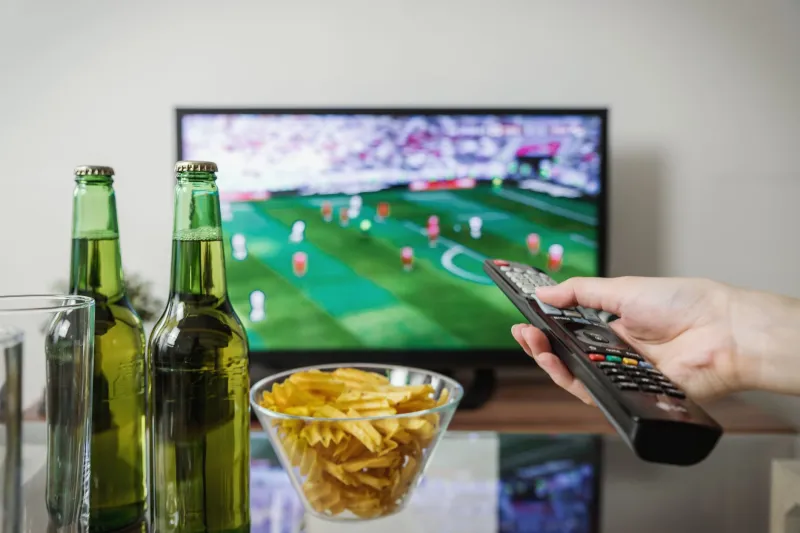
Night two (experiment): Watch two games with the TV muted. Keep a stats window open on your laptop or phone — live box score, possession data, whatever your book or a free stats site offers. Same drill: halftime notes, small stakes.
Then compare. Most people who try this notice three things fast.
First, you see more. Without a voice telling you where to look, you start tracking off-ball movement, defensive rotations, a lineman limping, a coach who's stopped substituting. Body language is data, and it's usually silent.
Second, your halftime reads get more boring — in a good way. Instead of "this team has all the momentum," you get "they've scored on four straight possessions but their pace is unsustainable; the under in the second half is live." Boring reads are usually accurate reads.
Third, you get fewer itchy fingers. A lot of live betting is emotionally triggered by sound — the roar, the gasp, the announcer losing his mind. Take the soundtrack away and the urge to fire on the next possession drops noticeably.
What to Watch For When There's Nothing to Hear
A few silent-viewing tells worth training your eyes on:
- Pace between whistles. Is the winning team hustling to the line or milking the clock? That's a live total signal before the odds fully adjust.
- Substitution patterns. A star sitting longer than usual in a close game tells you something the broadcast might mention two minutes later.
- Defensive spacing. In basketball especially, you can watch a defense slowly break down over a quarter. Announcers rarely call it until the run is already over.
- Bench energy. Body language travels. Teams that quit show it in the huddle before they show it on the scoreboard.
None of this replaces numbers. It complements them. The stat window is your anchor; the silent picture is your early warning system.
Why This Matters for Your Bankroll
The category this belongs in is education, not tips, because the real lesson isn't "mute your TV." It's this: every input you consume while betting either sharpens your read or manipulates it, and most of us have never audited our inputs.
The broadcast is one. The crowd noise is one. The odds ticker flashing red and green is a big one. The group chat yelling about a bad call is another.
Run the mute experiment once and you'll start noticing how much of your betting behavior is reactive to stimulus that carries zero handicapping value. That awareness alone is worth more than any single bet you'll make this season.
And hey — worst case, you spend a week watching games with the sound off, lose a few small stakes, and discover you really, truly cannot live without the announcers. That's cheap tuition.
Best case, you learn that your eyes were the sharpest handicapping tool you owned all along, and you'd just been drowning them out.
Give it one week. Keep the stakes small, keep the notes honest, and see which version of you makes better decisions: the one listening, or the one watching.