Three Games, One Brain: The Real Price of Betting on Autopilot
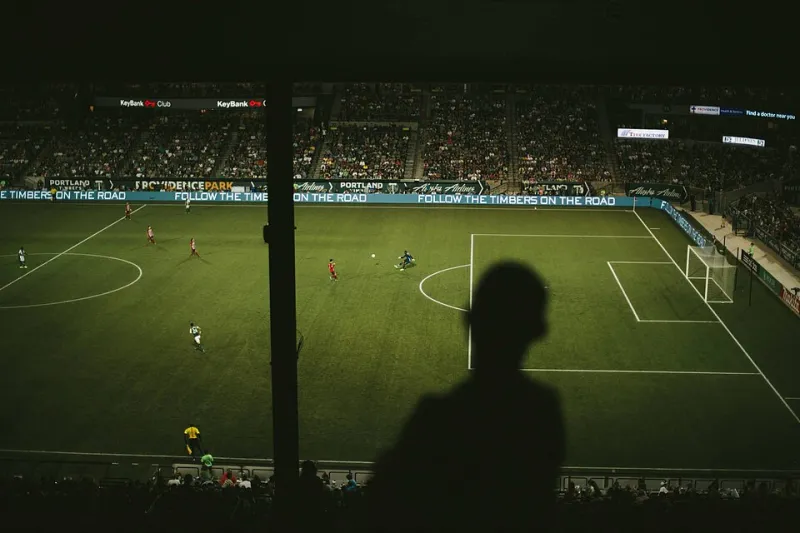
Photo: Jordan Beard, CC BY-SA 4.0, via Wikimedia Commons
It's a Sunday in November. The early NFL window is on the big screen, the Lakers are trailing by four on your laptop, and somewhere in your hand, a live betting app is quietly asking if you want to jump on the Chiefs' next drive at plus-money.
You place the bet. You don't really remember deciding to.
If that scene feels a little too familiar, you're not alone. Split-screen betting has become the default viewing experience for a huge chunk of American sports fans. But there's a hidden cost to running three games at once, and it doesn't show up on any receipt. Let's call it the third screen tax.
What Split-Screen Betting Actually Does to Your Judgment
Attention isn't a renewable resource. When you're tracking a Red Zone channel, an NBA spread, and a rolling live bet slip simultaneously, your brain does something predictable: it stops analyzing and starts reacting.
Research on task-switching has shown for years that jumping between inputs doesn't just split your focus — it degrades each one. In betting terms, that means:
- You chase momentum you didn't verify. A team "looks hot" because that's the only screen you glanced at.
- You miss the context that matters. Was that star player limping? Did the defense switch to a zone? You'll find out two bets too late.
- You default to impulse. When your working memory is full, the path of least resistance is whatever button is closest. That's exactly what in-play betting interfaces are designed to exploit.
Sportsbooks aren't villains here — they're just very good at meeting distracted people where they are. A one-tap bet during a commercial break is frictionless by design. Your job is to reintroduce the friction.
The Autopilot Tax: A Quick Self-Audit
Here's a framework you can run in about fifteen minutes at the end of the month. Grab your betting history and a notepad.
Step 1: Flag the distraction bets. Go through every wager from the last 30 days and mark the ones you placed while actively watching something else. Be honest — if the TV was on, it counts.
Step 2: Grade them. For each flagged bet, ask one question: Would I have made this bet if I were only watching this game? Mark it "yes" or "no."
Step 3: Do the math. Add up the stake (and the net result) of every "no" bet. That total is your personal distraction tax for the month.
For most people who try this, the number is uncomfortable. Even a modest $20 average stake with a handful of impulse live bets a week can quietly add up to $200–$400 a month in wagers you never would have made with a clear head. Over a football season, that's a nice TV — or a healthy bankroll — gone.
Step 4: Check the pattern, not just the total. Are the losses clustered around peak multi-game windows? Sunday afternoons? Late-night West Coast hoops? The timing of your tax tells you where the fix belongs.
Four Ways to Shrink the Bill
You don't have to become a one-game purist. You just need a few guardrails:
- Pick a primary screen per session. One game gets your actual attention. The others are background — and background games don't get bets.
- Set a live-betting allowance. Decide before kickoff how many in-play wagers you're allowed per session. When the allowance is gone, the slip closes.
- Use the 10-second rule. Any live bet has to survive a ten-second delay before you hit confirm. Most impulse wagers don't make it.
- Bet during dead time, not live time. Halftime, between games, commercial breaks — place your considered wagers when nothing is happening, not while the action is pulling at you from three directions.
The Bottom Line
Nobody sets out to bet carelessly. It happens one commercial break at a time, one glance at a second screen, one tap on a promo banner. The third screen tax isn't charged by your sportsbook — you levy it on yourself every time you spread your attention thinner than your bankroll can handle.
Run the audit this month. The number might sting, but it's the cheapest lesson in betting education you'll ever get.